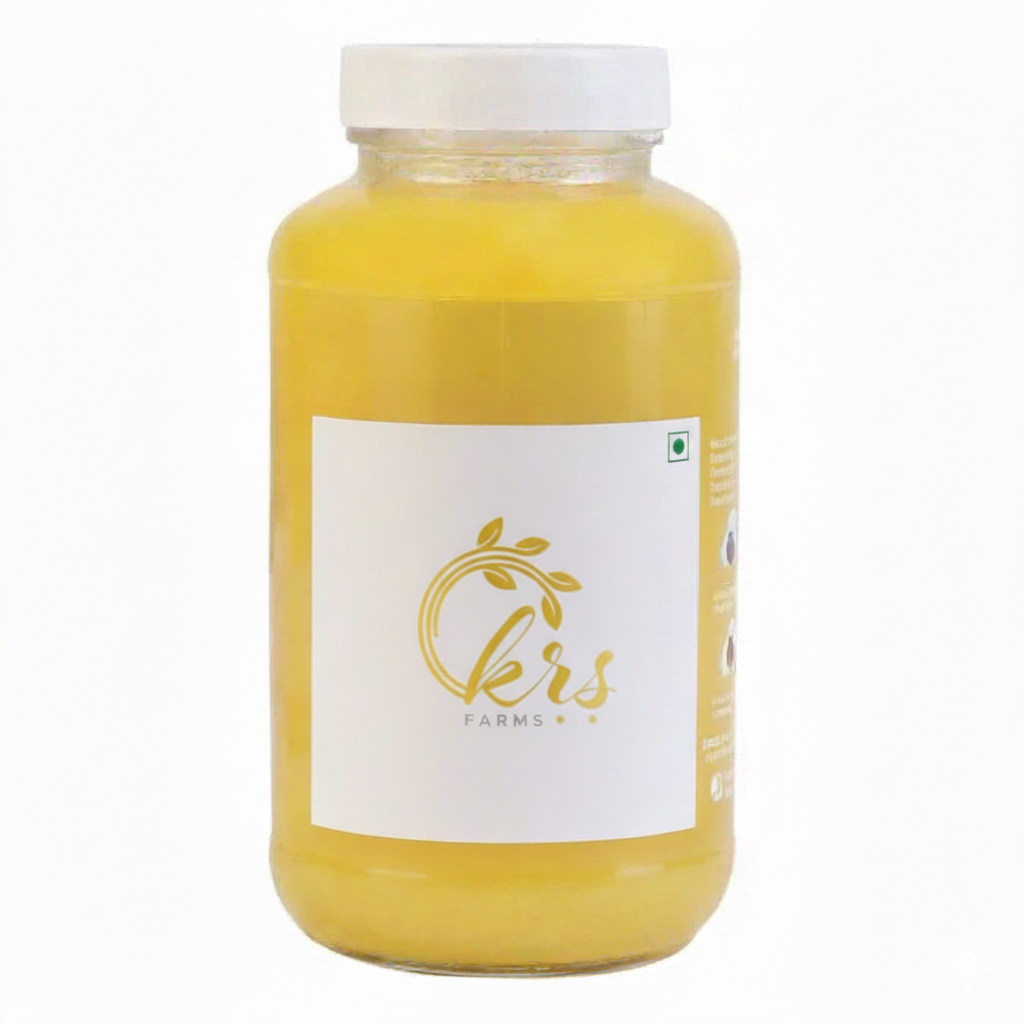
Pure A2 Gir Cow Ghee | Bilona Process | KRS FARMS
Pure A2 Gir Cow Ghee | Bilona Process | KRS FARMS
Couldn't load pickup availability
Why Milk Is Called “A2” (Indian Perspective)
In India, milk has traditionally come from native cow breeds such as Gir, Sahiwal, Tharparkar, Red Sindhi, Rathi, Kankrej, etc.
These desi breeds naturally produce milk that contains a protein called A2 β-casein, which is considered:
- Easier to digest
- Less inflammatory for many people
- Closer to the milk consumed in ancient India
Foreign or cross-bred cows (like Holstein Friesian or Jersey) produce a mix of A1 + A2 proteins, and A1 protein is often linked with digestive discomfort in some people.
So, in the Indian context, milk is called A2 when:
- It comes exclusively from Indian desi cow breeds
- The milk is free of the A1 protein
In Ayurveda and ancient texts, the milk of humped Indian cows (with a Surya Ketu Nadi) was always considered superior - this aligns with what we call A2 milk today.
What Is the Bilona Process of Making Ghee?
The bilona method is a traditional Vedic way of preparing ghee.
It includes five major steps:
1. Boiling raw desi cow milk
Fresh A2 milk is boiled to remove microbes and allow fermentation.
2. Making curd (dahi)
The boiled milk is cooled and set with a traditional culture to make thick curd.
3. Churning (Bilona)
The curd is churned using a wooden bilona in clockwise + anti-clockwise motion.
This separates:
- Makhan (white butter)
- Buttermilk (chaas)
This slow churning preserves nutrients and creates natural butter.
4. Heating the makhan
The butter is heated on a slow flame to produce golden aromatic ghee.
5. Filtering and cooling
The ghee is filtered and stored - this is called A2 Bilona Ghee.
This method is labour-intensive, time-consuming, and yields less ghee compared to the industrial cream-separation method.
Why pure A2 Bilona Ghee Is bit More Expensive
1. Very low yield
- 30-35 litres of A2 milk = 1 litre of Bilona ghee
- Regular factory ghee needs only 12-14 litres of milk.
2. Native cows produce less milk
Desi cows give 3-8 litres/day, much lower than Jersey/HF cows (15-25 litres/day).
Raising desi cows also requires more land, fodder, and care.
3. Manual, time-intensive process
The bilona method takes:
- More labour
- More time
- Slow heating and traditional churning
This increases production cost.
4. Grass-fed / free-grazing standards
Many A2 farms follow:
- Organic fodder
- No hormones
- Ethical gau-saṁvardhan practices
This increases operational costs.
5. Higher nutrient preservation
Bilona ghee contains:
- Higher CLA (Conjugated Linoleic Acid)
- More fat-soluble vitamins (A, D, E, K)
- Better aroma and granular texture
Short Summary
- A2 Milk = From Indian desi cows that naturally produce A2 protein.
- Bilona Ghee = Made from curd (not cream) using wooden churning → makhan → ghee.
- Expensive because it requires more milk, more labour, more time, and desi cows give less milk.
Made in Pune, MH.
Low stock: 1 left
View full details